


How to Prevent Overheating in Electrical Enclosures
Overheating is one of the most common causes of electrical equipment failure and unexpected production downtime. When temperatures inside an electrical enclosure rise above safe limits, components lose efficiency, service life shortens, and the risk of complete system failure increases. To keep your equipment stable, safe, and reliable, it’s important to understand why overheating happens and how to prevent it effectively.
Main Causes of Overheating in Electrical Enclosures
Several factors can lead to excessive heat buildup inside an enclosure:
- Internal Heat Generation
Power electronics such as VFDs, transformers, power supplies, and contactors naturally generate heat during operation. High-density components and faster switching speeds increase this heat load.
- Poor Airflow and Ventilation
Fully sealed panels or blocked vents trap heat inside. Natural convection alone is rarely enough for enclosures with high heat-producing components.
- High Ambient Temperature
Enclosures located in hot industrial areas, near ovens, or exposed to direct sunlight start at higher temperatures, reducing their cooling capacity.
- Poor Thermal Design
Suboptimal component layout, lack of heat dissipation paths, or insulation around heat-producing devices can prevent efficient cooling.
- Dust Ingress or Clogged Filters
Dust buildup blocks airflow and reduces cooling effectiveness, especially in fan-ventilation systems.
- Overloading and Short Cycling
Running devices above their rated capacity or frequently switching them on and off generates excess heat.
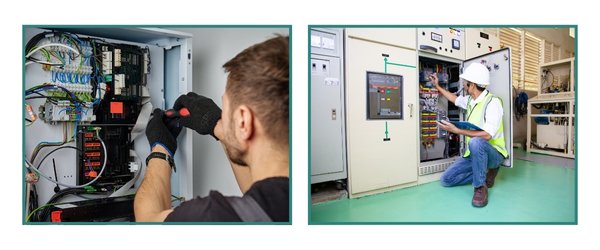 Why Fans and Vents Are Not Always an Option
Although fans and vents are common and low-cost cooling options, they are not suitable for every application:
- Not suitable for dusty or dirty areas
Fans pull contaminants into the enclosure, causing corrosion and electrical faults.
- Not ideal for humid or outdoor environments
Moisture can enter through vents and damage internal components.
- Not sufficient for high heat loads
Large heat dissipation from VFDs or power electronics cannot be controlled by a simple fan.
- Can compromise the enclosure’s IP rating
Adding vents reduces dust and water protection.
Evaluate Heat Load & Cooling Requirements
Ignoring cooling needs inside electrical enclosures can lead to costly failures. Electrical components operate within strict temperature limits, and high seasonal heat can easily push temperatures beyond safe levels.
- Calculated Internal Heat Load
Use one of the following methods:
- Use the heat dissipation rating provided (W or BTU/h).
- Estimate heat based on total power consumption (≈10–15% becomes heat).
- Measure enclosure temperature and compare it to ambient temperature to calculate heat gain.
- Evaluate External Heat Load
Heat can also transfer into the enclosure from the surrounding environment through its walls.
- Determine Cooling Capacity
Cooling Required (W) = Internal heat load + 20–30% safety margin
- Check Airflow and Component Layout
Ensure heat has a clear path to the cooling device and reposition components if needed.
- Use a Heat Load Calculator
A calculator helps avoid both under-cooling and over-cooling.
Install a Control Cooler Unit (Cabinet Air Conditioner)
A control cooler unit, also known as a cabinet air conditioner for enclosures, is a closed-loop cooling system designed to cool sealed electrical enclosures
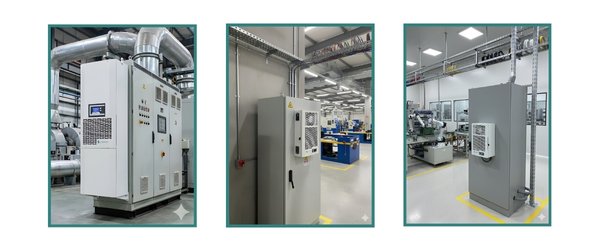 Why a Control Cooler Unit Is the Ideal Choice
- Maintains a fully sealed enclosure
Cooling occurs without exposing components to dust, moisture, or corrosive gases. - Stable temperature control
Keeps components within safe limits even with fluctuating ambient temperatures. - Wide capacity range
From compact thermoelectric coolers to high-capacity compressor-based systems. - Low maintenance
Closed-loop cooling reduces filter cleaning and eliminates contamination risks. - Uniform cooling
Minimizes thermal hotspots and protects sensitive electronics.
Control Cooler Unit Advantages:
- Provides consistent cooling even in extreme ambient heat
- Does not compromise IP rating
- Effective for high heat loads such as VFDs and inverters
- Protects components from condensation and dust
With stable, contamination-free, and controlled cooling, a control cooler unit is the best long-term investment to extend panel lifespan, maintain stability, and minimize downtime.
Schedule Periodic Inspection & Cleaning
To prevent overheating risks, it’s essential to implement routine maintenance on your cooling system, including:
- Visual inspections
Monthly or quarterly checks for dust buildup, blocked vents, corrosion, and any signs of overheating (discolored insulation, scorch marks).
- Clean filters regularly
Dust-clogged filters reduce cooling efficiency.
- Inspect cables and terminals
Loose terminals generate excess heat.
- Monitor enclosure temperature
Use indicators or sensors to verify the system maintains the intended setpoint.
- Service the control cooler unit
Check refrigerant levels, internal fans, and condenser condition.
- Schedule monthly or yearly inspections
Regular inspections catch overheating risks before they escalate.
Need Help Choosing the Right Control Cooler Unit?
The Lamvent technical team is ready to assist you in selecting the ideal Lamvent Control Cooler Unit to keep your electrical enclosure safe and stable. With expert guidance, you can ensure optimal operating temperature, long equipment life, and minimized downtime.
Contact Lamvent today to optimize your enclosure’s thermal protection with a proven and efficient cooling solution.

Related Posts
Nothing found.